What is the Meaning of Phoenix Tattoos


The term phoenix, comes from the Greek word phîonix, which means "purple" or red. It refers to a bird capable of being reborn from its ashes and thus living 500 years. The paleontologist and anatomist Cuvier (1769 - 1832) thought it resembled the goldfinch, while others compared it to the birds of paradise and more rarely to pink flamingos.
Although the phoenix is found in Persian mythologies (Simurgh), Chinese (Fenghuang), Aborigines (Minka bird) and Amerindian (Thunderbird), its origin is African, more specifically Ethiopian. According to legend, the phoenix would die and then reappear in Arabia and in neighboring countries, such as Egypt, where it was associated with the cult of the sun.
A large bird like a raptor, its plumage is gold, but also blue, purple and red. It is sometimes called a bird of fire, for it can make flames burst out of its beak and emit energy comparable to the sun.
If phoenix tattoos are so popular today, it is partly due to the ancient and mythological meaning of this legendary bird, but also to its aesthetic rendering. Let's see what the meaning of phoenix tattoos is.
The Phoenix, symbol of the cylce of life
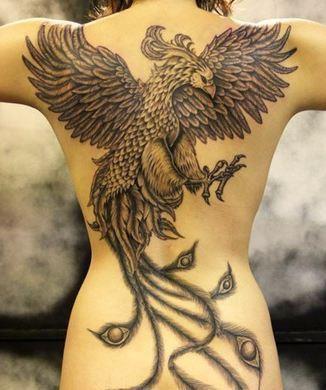
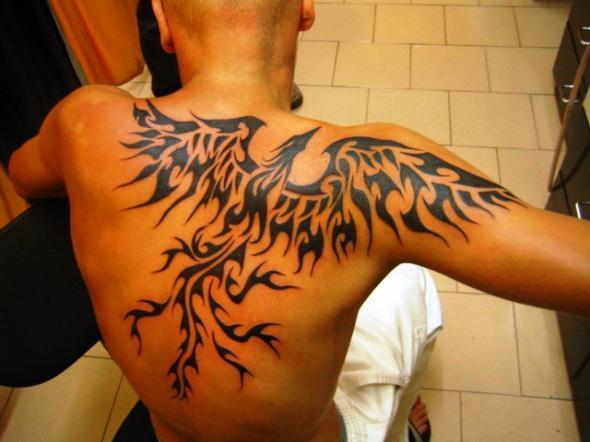
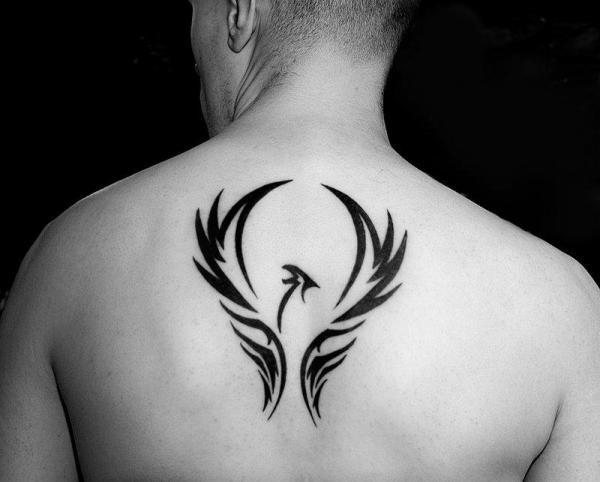
Out of all the bird tattoos, Phoenix tattoos are more popular among women (who prefer a tattoo in the back or lower abdomen) than men (who prefer to have their tattoos armed). This preference highlights the phoenix's appeal across different demographics.
According to mythology, the phoenix dies and is reborn, so that it represents the cycle of life. It may also mean that the person has had a difficult or even tragic experience but has recovered. In this sense, it symbolizes the transcendence of oneself. The tattoo serves as a powerful reminder of one's resilience and growth.
Getting a tattoo of a phoenix serves to mark a new beginning, often signifying a personal transformation or a significant life change.

Symbol of strength and longevity
The phoenix sends a strong message to others: you are strong and able to face a harsh, even cruel, world with great adversity. Those who believe in the immortality of the soul will gladly go for this tattoo (the phoenix lives 500 years and sets fire to his own nest when he feels the near end, another phoenix will be born from the blaze ...). This cyclical rebirth is a testimony to enduring strength and resilience.
Additionally, the phoenix's association with longevity is not just a testament to its mythical lifespan but also a symbol of enduring legacy and wisdom passed through generations. Many see it as a symbol of hope that transcends time, inspiring individuals to leave a lasting impact.

Symbol of Hope and Perseverance
Regardless of the adversity to which the tattoo is subjected, this person keeps hope and remains optimistic because he or she knows that better days are coming. He is reborn and rebuilt on his own wounds, however great they may be. The phoenix symbolizes courage, which is precisely the ability to rise when one is at their lowest point.
In times of struggle, the phoenix serves as an emblem of unwavering perseverance, reminding us that no matter how deep the abyss, there is always a way forward. This powerful imagery provides comfort and strength to those who have faced significant challenges, acting as a beacon of hope.

Fire symbol
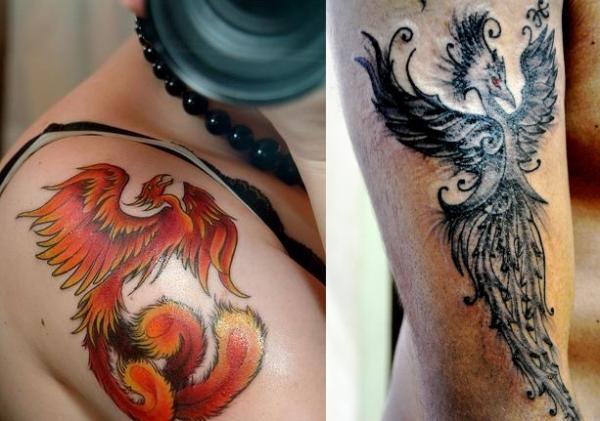
Like the zodiac's signs of fire (Aries, Leo and Sagittarius) the phoenix is linked to the Fire element. Flames often run through its wings and head; If you are considering a color tattoo, go for red, orange and yellow. These vibrant hues capture the essence of the phoenix's fiery nature and its transformative power.
The alchemists of the Middle Ages took the phoenix as their symbol, fire being essential to their work. It also symbolized the sun, an element indispensable to earthly life, and therefore vitality or attachment to the life of the person who bore it. The phoenix's connection to fire also signifies purification and renewal, as fire consumes the old to give way to the new.

Symbol of freedom and delicacy
All freedom-loving spirits, who like to travel or dream of leaving far away, will not be insensitive to phoenix tattoos, a symbol of openness to the world, of curiosity and intellectual independence. The phoenix embodies the spirit of adventure and the desire to explore beyond known horizons.
If the phoenix represents strength, it is also capable of tenderness: if this legendary bird produces destructive flames, know that it feeds only on dew and does not kill to survive. This duality highlights the balance between power and gentleness, making it a compelling symbol for those who cherish both strength and compassion.
The phoenix through mythology
As we've mentioned in the introduction, the Phoenix is present in many ancient civilizations' mythology. Let's take a look at each of the meanings that those people gave to the figure of this legendary creature.
For the ancient Chinese
The Chinese version of the Phoenix is called Fenghuang (凤凰). It is also known as the "August rooster" and according to ancient literature is a mixture of several animals (rooster, swallow, stag, fish, goose and tortoise). This mythological animal represents both grace and virtue in a very similar way that the yin and yang do. At the same time, it is commonly seen depicted with the dragon as it is said that uniting them represents a whole, which is why they are both used in many decorations at Chinese weddings. The Fenghuang is a symbol of harmony and balance, reflecting ideals of cooperation and unity.
For the ancient Jews
The Jews gave the Phoenix a meaning of resistance and integrity, as it is said to be the only creature to resist the temptation of the forbidden fruit. To do so it turned into flames and came back to life after three whole days, which is why it is a reminder of resistance against temptation. This story illustrates moral fortitude and the power of virtuous choices in the face of challenges.
For ancient Persians
The simurgh was depicted in many Iranian silverware and was popularly known for having seen the end of the world over three times, which is why it is a symbol of wisdom and intelligence. It was also meant to represent fertility, as their phoenix was in charge of purifying their land and water. The Simurgh embodies the cycle of life, death, and rebirth, maintaining ecological balance.
For ancient Egyptians
If you take a look at the many representations of the Sun God Ra, you will notice that one of its favorite materialization is the phoenix. Known as the Bennu bird, it resembled a Heron and was the guardian of Heliopolis, which was in turn known as the city of the Sun. The Bennu bird symbolized creation, renewal, and the eternal cycle of life, playing a pivotal role in Egyptian cosmology.
For the Japanese
Still today, the phoenix has a great role in Japanese culture, as it is depicted as an emblem of the empire of the rising sun. Known in Japanese as the Hou-ou, it was anciently adopted as a symbol of the empress and is a symbol of prosperity and peace. It is also a representation of the sun, fidelity and obedience. The Hou-ou is revered for its auspicious qualities, believed to bring good fortune and stability.
If you want to read similar articles to What is the Meaning of Phoenix Tattoos, we recommend you visit our Beauty & Personal Care category.
Tips
- We find the phoenix over the ages: among the Persians, the Greeks, the Jews, the Romans, the Christians. Its presence in these diverse cultures underscores its universal appeal as a symbol of rebirth and endurance.
- The phoenix is also present in the literature. 3 examples: Rabelais's 5th book, Voltaire's Princess of Babylon, Harry Potter by J.K. Rowling. These works explore themes of transformation and resilience through the myth of the phoenix.
- CONA Iconography Record: Bennu (Egyptian deity) (Getty Research Institute)
- Pendant (Bowers Museum)